
California Native Plant Society
in collaboration with East Bay Municipal Utility District
Escuela Bilingüe Internacional Native Plant Garden
The plants in this garden were generously donated by the following Bay Area native plant nurseries: Western Star Nursery (Sunol), Watershed Nursery (Richmond), Devil Mountain Nursery (San Ramon), CNL Native Plant Nursery (Mill Valley), Sloat Garden Center (San Francisco) and Down By The Bay Nursery (Hayward). There are 26 different species of plants in the garden. 6 are considered Keystone plants. The presence or absence of a Keystone species determines the number of other species in the area. In this case, they support multiple species of Butterflies or Moths by hosting caterpillars and larvae and providing food for many different types of pollinators.
6 Keystone Species:
1. California Lilac-Ceanothus ssp.
Ceanothus Genus supports 80 species of butterflies and moths and provides food for many native bees and other pollinators.

"Dark Star"

"Blue Cascade"

Blue Blossom-Ceanothus thyrsiflora
2. Coyote Bush-
Baccharis pilularis
Supports 18 species of butterflies and moths as well as provides habitat for small mammals and birds.


(Female plant)

(Male plant)
3. Silver Lupine-
Lupinus albifrons
Supports 70 species of butterflies and moths and is popular with native bees, especially Yellow-faced Bumblebees.


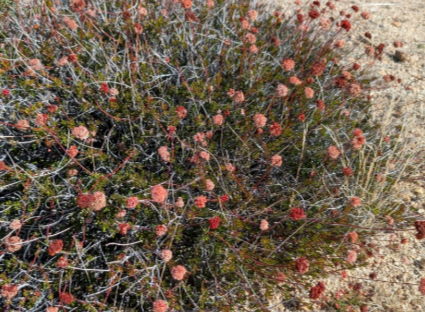
4. Buckwheat-
Eriogonum ssp.
The Genus Buckwheat supports 30 species of butterflies and moths and is popular with native bees and beneficial wasps.
California Buckwheat-
Eriogonum fasciculatum
Host for Hairstreak butterflies including the Lotus Hairstreak.

Naked Buckwheat-
Eriogonum nudum
Host for Hairstreak butterflies including the Gray Hairstreak.


5. California Goldenrod-
Solidago californica
Supports 40 butterflies and moth species including the Northern Checkerspot Butterfly and is an important late summer/fall nectar source for native bees, honeybees, and butterflies.

6. Pacific Aster-
Symphyotrichum chilensis
Supports at least 6 native moths and butterflies and provides critical late summer/fall food for pollinators before hibernation.

The rest of the plants
Malva rosa-
Malva assurgentiflora
Host for native California moths including the Painted Tiger Moth and provides a long lasting source of nectar and pollen for hummingbirds, butterflies and some bees.

Coffeeberry-
Frangula californica
Host for many native California moths and is a nectar and pollen source for multiple pollinators. Its berries provide food for birds and other mammals.


California Pipevine-
Aristolochia californica
Host for the Pipevine Swallowtail Butterfly and pollen for small flies and gnats who are its pollinators.


Pink Honeysuckle-
Lonicera hispidula
Host for native California moths and supports multiple pollinators including birds and bats. Its berries provide food for birds.


Roger's Red Grape-
Hybrid of Vitis californica
Host for native California moths and supports multiple pollinators including birds and bats. The berries feed birds and other animals.


Sticky Monkeyflower-
Diplacus aurantiacus
Host for native California moths and the Variable Checkerspot, Painted Lady and Common Buckeye Butterflies as well a nectar and pollen source for other pollinators during the midsummer.

California Fuschia-
Epilobium canum
Host for Native California moths and supports multiple pollinators including hummingbirds and bats.


Blue-eyed Grass-
Sisyrinchium bellum
Provides nectar and pollen for bees, butterflies and moths.

Soaproot-
Chlorogalum pomeridianum
Host plant for the Brown Elfin Butterfly and pollinator source for bees, butterflies and moths, especially bumblebees.


Allen Chickering Sage (Hybrid of Purple Sage (Salvia leucophylla) and Cleveland Sage (Salvia clevelandii.)
Host plant for multiple native California moths. A nectar and pollen source for multiple pollinators including hummingbirds.


Hummingbird Sage-
Salvia spathacea
Host plant for multiple native California moths. A nectar and pollen source for multiple pollinators including hummingbirds.

Host plant for the Anise Swallowtail and the Variable Checkerspot butterflies. A nectar and pollen source for bees and other pollinators.


Purple Needlegrass-
Stipa pulchra
Host plant for skipper butterflies including the Umber Skipper. Provides forage for wildlife.


Red Fescue-
Festuca rubra
Host plant for skipper butterflies, including the Umber Skipper. Providers forage for wildlife.


Silk Tassle-
Garrya elliptica
Provides shelter for birds and insects. Berries provide food for birds.


Male flowers

Fruits
California Sage-
Artemisia California
Habitat for birds and other animals. A nectar and pollen source for many pollinators.

